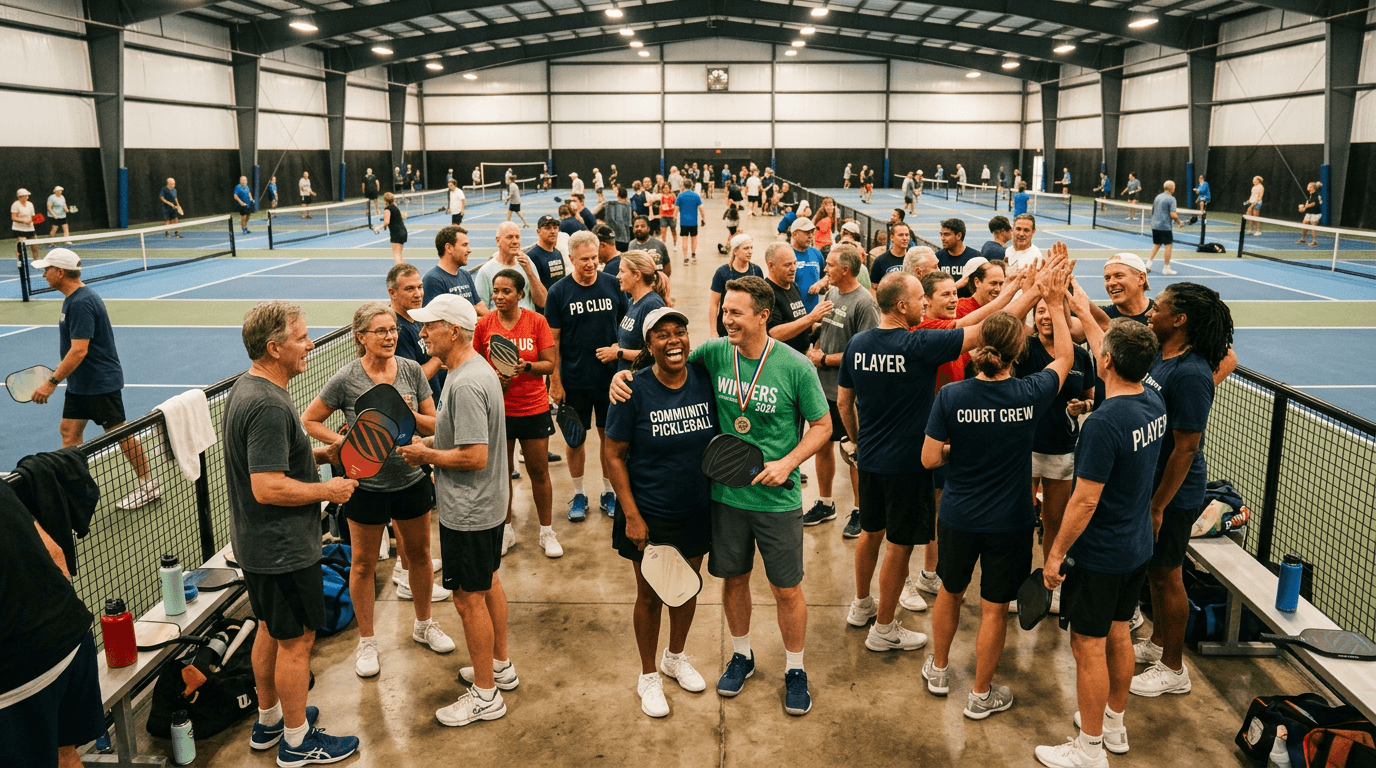
The Rise of Club Pickleball in Canada — Why Teams Are the Future of the Sport
In 2019, most Canadians who played pickleball didn't know what a DUPR rating was. Today, it's a number they introduce themselves with.
In 2021, most recreational pickleball players in Canada had never competed in a sanctioned tournament. Today, weekend tournament events routinely fill up in days, waitlists are standard, and players talk about their bracket results the way recreational golfers talk about their handicap.
Pickleball in Canada didn't just grow. It matured. The sport moved from a parking lot curiosity to a legitimate competitive community faster than almost anyone predicted — and it isn't done yet.
The next chapter is already being written. It's about clubs.
How We Got Here
The explosive growth of pickleball in Canada from roughly 2019 onwards was driven primarily by individual participation. The sport's accessibility — low barrier to entry, easy to learn, playable across age groups — brought in hundreds of thousands of new players who started at recreation centres, community courts, and indoor facilities across the country.
Tournament infrastructure followed. PickleballBrackets and PickleballTournaments.com gave organizers tools to run events at scale. DUPR gave players a universal rating system to understand where they stood. Pickleball Canada built a sanctioning structure that gave serious players a competitive pathway.
The individual tournament model served this growth phase well. Players needed somewhere to compete. Organizers needed tools to run events. Both got what they needed.
But individual tournament play has a ceiling.
The format — register, compete, receive your result, go home — doesn't build the kind of ongoing community that keeps players invested year after year. There's no continuity between events. No shared season. No collective stakes. The experience is excellent on Saturday, but it doesn't give players a reason to come back to Tuesday evening practice with the same urgency.
Clubs started noticing this. The players most likely to stay active, improve consistently, and invest in the sport over time weren't just the ones who played the most tournaments. They were the ones who felt like they belonged to something.
What Clubs Provide That Tournaments Can't
A club gives a pickleball player something a tournament bracket never can: identity.
When you play for a club, you're not just competing for your own rating. You're representing something. The people you practise with every week are the people you compete beside on tournament day. Your wins help your club's standing. Your losses are losses you process together and learn from together.
This shift from individual to collective stakes changes how players engage with the sport. Club players practise with more purpose because their improvement helps their teammates. They travel to away stops because the team needs them. They mentor newer players because the club's depth depends on it. The sport stops being about your own bracket and starts being about your community's performance.
This is not a small difference. It's the difference between a hobby and a sport.
The Format That Makes It Work
Inter-club competition requires a format designed for teams — not just individual brackets run side by side.
The Klyng Cup format was built specifically to solve this problem. Its five-game team structure — Men's Doubles, Women's Doubles, two Mixed Doubles matchups, and a sudden death tiebreaker — creates a genuine team competition where every player's contribution is visible and every matchup has tactical significance.
The multi-stop season format creates longitudinal stakes. A single event result is just data. A season-long standings table is a story — with protagonists, antagonists, turning points, and a champion.
The captain role distributes leadership. Every team needs someone managing rosters, setting lineups, and making in-match decisions. This creates a tier of engaged community leaders within every club — people who are invested not just in their own game but in the collective performance of the group.
The DUPR integration ties individual growth to collective outcomes. Players can see exactly how their rating improvement affects which bracket they compete in and how their individual match results feed into the club's standing. Personal development and team performance become aligned rather than separate goals.
The Infrastructure Is Ready
For most of Canadian pickleball's growth period, the infrastructure to run club-format competition didn't really exist.
Running an inter-club league manually — coordinating rosters across multiple clubs, managing lineup submissions, tracking standings, submitting results to rating systems, handling payments — required a level of operational effort that most volunteer club directors simply couldn't sustain alongside their actual jobs.
This is changing. Tournament management software built specifically for the club-format experience — with captain portals for delegated scoring, automated DUPR submission, live standings, and integrated payment collection — has made it feasible for clubs of any size to run a competitive season without needing a dedicated operations team.
The barrier isn't operational anymore. It's awareness. Clubs that don't yet run competitive team events largely don't know they can, or don't know how simple the setup process has become.
What the Next Five Years Look Like
The trajectory is clear.
Individual tournament play will continue to grow — it's the natural entry point for new competitive players. But the players who stay engaged in the sport for five, ten, fifteen years will increasingly be players rooted in clubs with competitive team programs.
Regional rivalries will develop. Clubs that compete against each other season after season will build the kind of history and animosity that makes competition genuinely exciting for everyone involved, not just the players on the court.
New clubs will form specifically to compete. As the club-format competition ecosystem matures, players who currently play as wildcards or independent competitors will form their own clubs — independent community teams without a physical facility, organised around a competitive identity rather than a physical space.
The sport will develop more leaders. Every club that runs a competitive program needs captains, directors, event managers, and community organisers. These roles are where some of the sport's most passionate and capable people find their most meaningful contribution.
Canadian pickleball has earned its next chapter. It built its foundation on individual accessibility. It's building its future on collective identity.
The clubs that get ahead of this shift now — that build competitive team programs, develop their rosters, and invest in the season-long competitive experience — will be the clubs with the deepest, most engaged communities in five years.
The sport is ready. The infrastructure is ready. The players are ready.
Come build something worth competing for.
Klyng Cup Team
klyngcup.com